
By the time June rolls around in Reception and Nursery, phonics teaching is in full bloom — and it’s the perfect time to help children become confident readers. Most children have been introduced to a range of sounds, tricky words, and sentence writing. Some are starting to read fluently and write short stories, while others still need support blending even simple CVC words.
Whether they’re already strong readers or just getting started, June is your moment to close gaps and guide every child toward becoming a fluent, independent reader before summer.
Here’s a breakdown of five key areas to focus on this June, with classroom insights and practical, research-backed strategies to build confidence and close gaps.
Spot the Gaps Before They Trip Them Up
Children often appear to know a sound when shown a flashcard, but when reading a word or writing independently, it disappears. This usually means the sound hasn’t been embedded into long-term memory, or they haven’t had enough chances to apply it.
To address this, focus on application checks rather than simple recall. Can they use the sound in a word? Can they spot it in a sentence? Can they write it independently?
Try:
- Sound + Sentence Challenge: Choose a focus sound and say a sentence aloud (e.g. “The sheep is in the shed.”). Ask, “What sound did you hear more than once?” Write the sentence on a whiteboard and let children underline or circle the sound. Turn it into a partner game or use actions to reinforce learning.
- Mini Dictations: Use short 3-word phrases with target sounds (e.g. “rain on tail”). Ask children to write them on mini whiteboards. Discuss any tricky parts together. Use only decodable words and repeat this activity regularly to build fluency.
- Jot it Journals: Create mini booklets where children write 2-3 words or a sentence each day using a “sound of the day” (e.g. bee, tree, feet). Encourage illustrations to enhance memory and engagement. This offers ongoing assessment and evidence of progress.
Research from the Education Endowment Foundation (EEF) supports frequent retrieval practice as a method for improving retention and writing confidence.
Target Blending with Fun, Daily Practice
Blending doesn’t click at the same pace for everyone. Some children struggle with auditory memory; others haven’t yet understood that blending sounds creates meaning. It’s a cognitive leap.
Daily, low-pressure blending activities are essential. Oral blending builds a strong foundation for decoding written words.
Blending practice doesn’t need to stay in the classroom either. Looking for easy phonics ideas to share with parents? Here are 6 fun and simple activities to try at home.
Try:
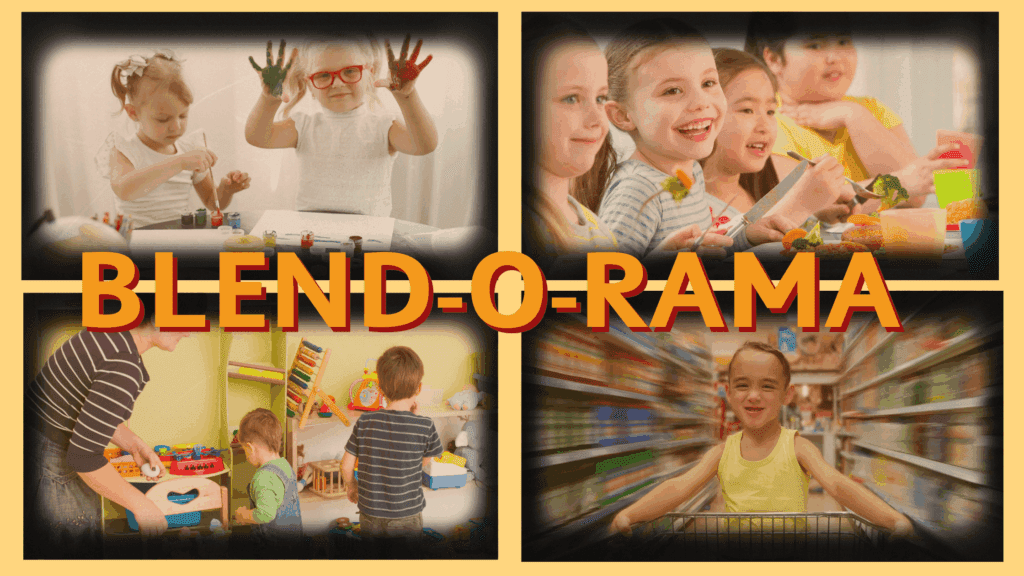
- Blend-o-Rama: Use oral blending during transition times (e.g. “Can you touch your l-e-g?”). This encourages phoneme awareness with no extra resources.
- Build-a-Word Baskets: Mix phoneme tiles and ask children to build mystery words from pictures or spoken prompts (e.g. cat).
- Silly Blending Stories: Tell stories with decodable, segmented words (“He sat on a b-u-s and saw a f-o-x…”). Let children blend the words aloud. Add a puppet or hat for extra fun.
The DfE’s Letters and Sounds guidance and Jolly Phonics both stress the value of oral blending as a foundation for fluent reading.
Supercharge Their Writing Confidence
Writing brings everything together, but it can also be a challenge. Learners may:
- Not have automatic recall of sounds or tricky words
- Struggle to segment words while thinking about handwriting
- Feel overwhelmed and lack confidence
To reduce cognitive load, provide scaffolds like sentence starters, sound mats, or partner activities.
Try:
- Sound Talk Partners: One child says the sounds, the other writes the word.
- My Turn, Your Turn Sentence Writing: Model a sentence, then let the child copy and adapt it.
- Visual Sound Mats and Word Banks: Have these available at each table to support independent writing.
Cognitive load theory supports breaking tasks into manageable steps to avoid memory overload and build fluency.
Make Tricky Words Less… Tricky
Tricky words don’t follow standard phonics rules, making them hard to decode. Rote repetition alone isn’t enough, especially for children with limited visual memory.
Use multi-sensory strategies to help tricky words stick:
- Tricky Word Action Songs: Turn tricky words into songs using familiar tunes and actions. For example, “c-o-m-e, that spells come,” sung to “Twinkle Twinkle.”
- Tricky Word Detective: Show the tricky word (e.g. said). Say it as it’s spelt: “s-a-i-d.” Act puzzled. Then say it correctly: “said.” Highlight the tricky part (“ai” makes /e/). Write it in the air, then on whiteboards.
These approaches help children hear and see the incorrect version before correcting it, strengthening recall. Multi-sensory methods are particularly effective for learners with dyslexia or other literacy difficulties.
Stretch the Strong Readers
Some children are already reading fluently. Without challenge, they may plateau. Confident readers need opportunities to apply their skills in meaningful ways.
Try:
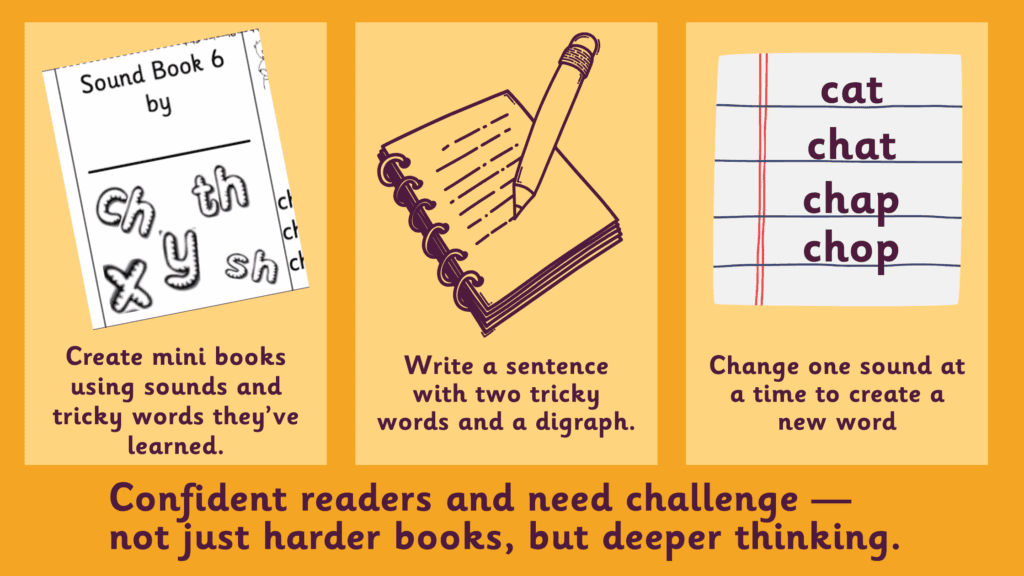
- Mini Book Making: Encourage them to create short stories using target sounds or tricky words.
- Challenge Cards: Ask them to write sentences using digraphs and tricky words.
- Sound Swap: A game where they change one sound at a time (e.g. cat > chat > chop).
Stretching learners through challenge, not acceleration, helps keep them engaged. The EEF notes that working in the “zone of proximal development” supports growth and motivation.
Final Thoughts: Make June Count
June is not the end, but a turning point. It’s when phonics starts coming to life in children’s reading and writing. This is your chance to build stamina, boost confidence, and close those last little gaps.
Keep learning playful and purposeful. You are helping children crack the code to reading and writing, setting them up for a confident start in Year One. That’s something worth celebrating.